Aluminum Tubing vs Steel Tubing: Which Material Fits Your Project Best?
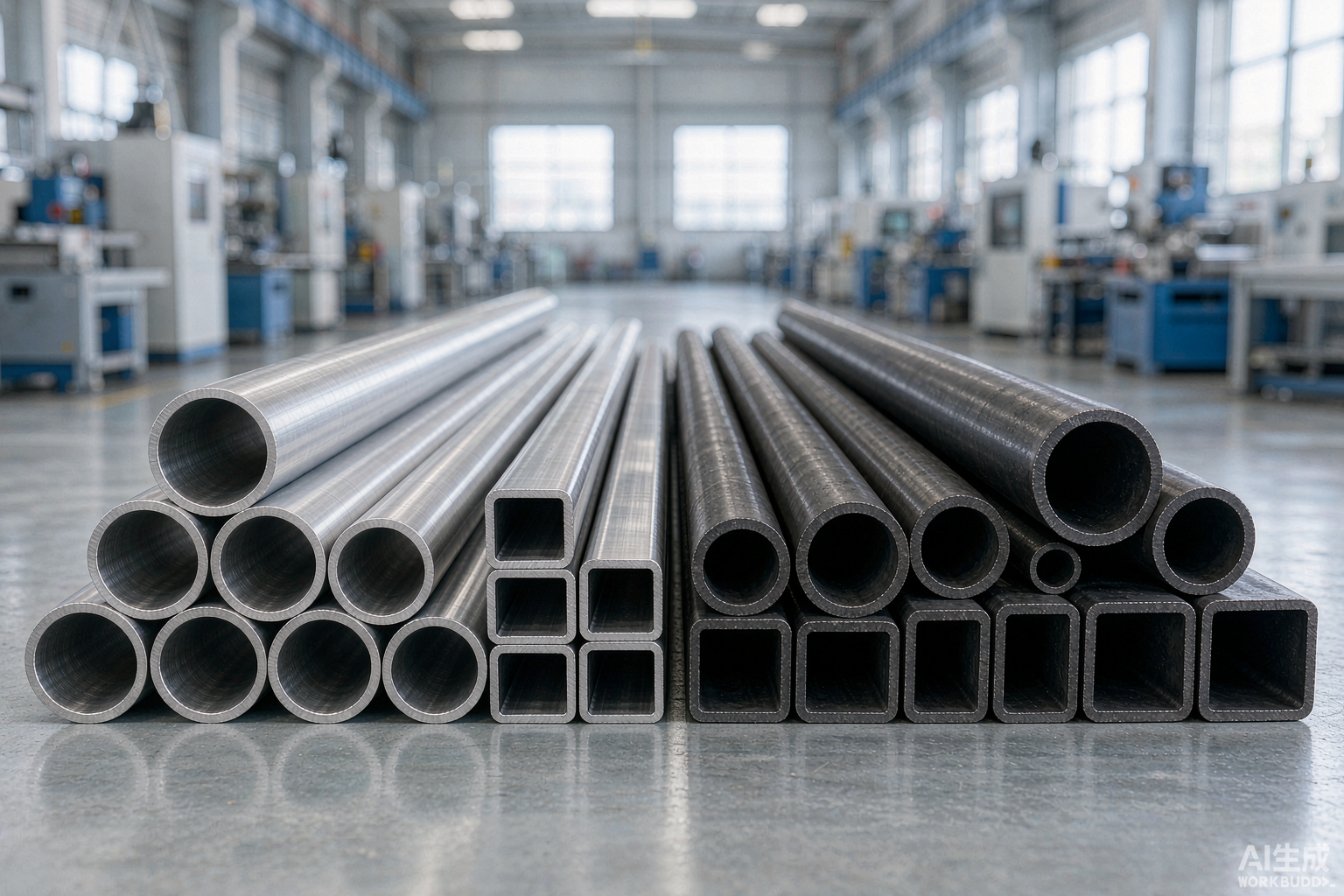
Choosing between aluminum tubing and steel tubing is one of the most frequent decisions in fabrication, construction and product design. Both materials are strong and easy to source, yet they behave very differently in weight, corrosion behavior, processing freedom and lifetime cost. Here is how they compare in real projects - and when each one is the better fit.
| Property | Aluminum Tubing | Steel Tubing |
|---|---|---|
| Weight | About 1/3 the weight of steel | Heavy |
| Corrosion | Naturally corrosion-resistant, does not rust | Rusts unless galvanized, painted or stainless |
| Forming | Easily extruded into custom and complex shapes | Mostly standard round / square / rectangular sections |
| Thermal conductivity | High - excellent for heat dissipation | Low |
1. Weight: Aluminum Wins by a Wide Margin
Aluminum weighs roughly one third as much as steel. For identical tube dimensions, moving from steel to aluminum can cut the weight of a structure by 50% or more once wall thickness is tuned for stiffness. In transportation, robotics, façade systems and portable equipment, that weight saving translates directly into lower energy use, easier handling and reduced shipping cost.
2. Strength: Steel per Section, Aluminum per Kilo
Steel offers higher absolute strength and hardness and resists denting better. When a design is space-limited and demands maximum load from a compact section, steel remains hard to beat.
Measured by strength-to-weight ratio, however, alloys such as 6061-T6 and 6063-T5 perform outstandingly well. Engineers routinely match steel's performance with a slightly thicker aluminum wall - and still save a large share of the total weight.
3. Corrosion Resistance: No Rust Protection Needed
Steel rusts. Outdoors it must be galvanized, painted or powder coated, and every coating needs inspection and repair over the years - corrosion simply starts at the first scratch.
Aluminum builds its own protection: a dense natural oxide layer shields the metal beneath and renews itself when scratched. With optional anodizing, an aluminum structure can stay serviceable for decades with minimal maintenance, even in humid or coastal environments.
4. Forming Freedom: The Extrusion Advantage
This is where aluminum really separates itself. Through the aluminum extrusion process, tubes can be produced not only in round, square and rectangular sections but in fully custom profiles - multi-cavity tubes, integrated screw ports, heat-dissipation fins and snap-in geometry - at very reasonable tooling cost.
Steel tubing is limited to rolled and welded standard sections; a special shape means heavy, expensive forming or fabrication work.
5. Total Cost: Look Beyond the Price per Meter
Steel is usually cheaper per kilogram, and may be cheaper per meter. But the finished-project cost often tells another story:
- Lower transport and installation cost thanks to reduced weight
- No anti-rust coating or periodic repainting
- Faster, cleaner machining and joining
- High scrap value at end of life
For most outdoor, weight-sensitive or corrosion-prone applications, aluminum's lifetime cost is clearly lower.
So Which One Should You Choose?
Choose steel tubing when the structure needs maximum absolute strength in the smallest section, or when the budget is extremely tight and the environment is dry and mild.
Choose aluminum tubing when weight, corrosion resistance, custom shapes, thermal performance or long-term maintenance cost matter - which today covers the majority of industrial and architectural projects.
As a professional aluminum extrusion manufacturer, Yuanhe produces custom aluminum tubing and profiles from 1000-7000 series alloys, with precision cutting, CNC machining and anodizing under one roof. Send us your drawings for a fast, factory-direct quote.